Resources · II · For creatives
In italiano →Composition
I build the frame with the director. My job is to find the simplest way to show what the scene has to say, with something that keeps it away from textbook composition.
With the director we choose
- Shot size. How much world and how much face.
- Camera height. Eye level, high, low.
- Depth. What sits in the foreground and what in the background.
- Movement. Locked off, dolly, Steadicam or handheld.
- Long‑siding or short‑siding. The character looks toward the open space of the frame, or toward the near edge, with the empty space behind the head.
The rules of composition
Balance and tension
These are not laws: they are the most common ways of composing, the ones the eye expects, and they give balance. The most classic is long‑siding: the character looks toward the side of the frame with more space. Moving away from them is a storytelling choice. Short‑siding (the character looks toward the near edge and the empty space stays behind the head), a face pushed toward the edge, a lot of empty space above the character: the frame becomes less usual and carries a thread of tension, when the scene needs it.
Try the grids
Blocking patterns
From my work frames
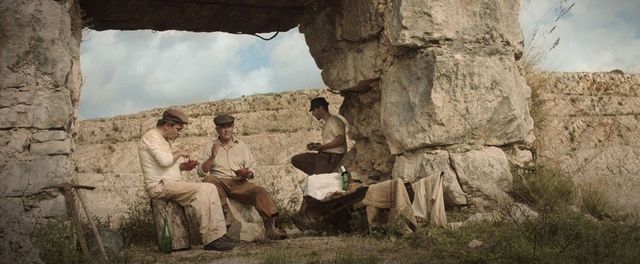
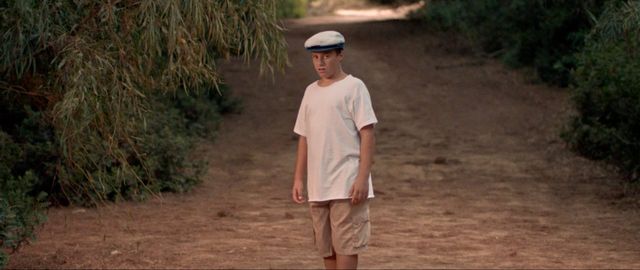
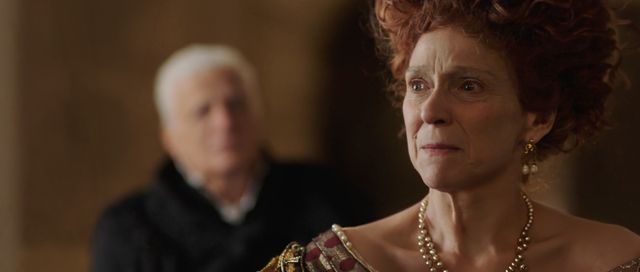
Every frame comes from work I photographed. For a project in development: info@nicolacattani.com · showreel.
Frames belong to their productions. For reference only, credited as “Cinematography by Nicola Cattani AIC”.